Crypto, how to position for the next cycle instead of chasing the last one
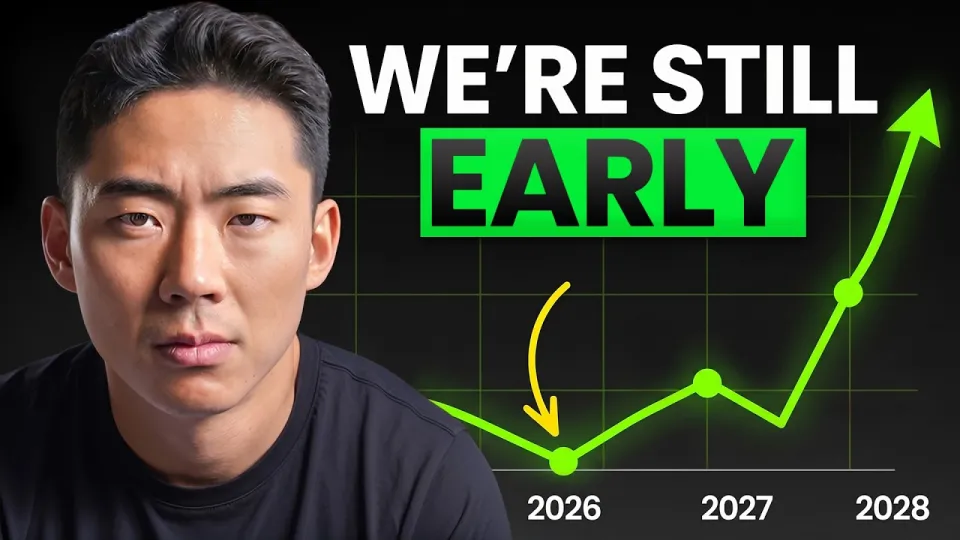
Video: my plan to make millions in crypto 2027
Want articles like this for your own video to promote it on YouTube and Google? Order them through the Telegram bot @sat_sit_bot. Articles with your video embedded are written and posted by the bot itself — on popular topical sites (no ads). Try it free: 50 articles on us.
Key takeaways
- Brian Jung's video "my plan to make millions in crypto 2027" was published on 2 October 2026 and splits into three blocks: why he is bullish, the narratives driving the next cycle, and his own allocation plan.
- The four narrative buckets worth tracking are Bitcoin as institutional collateral, Ethereum and its layer-2 economy, high-throughput layer-1s such as Sui and Solana, and real-yield DeFi plus tokenized assets.
- A workable allocation splits capital into a core (Bitcoin and Ethereum), a satellite (two to four narrative bets) and a cash reserve for drawdowns, rather than 100% altcoins.
- Regulatory clarity is a double-edged sword: ETF and bank access brings capital but also centralization, a tension raised repeatedly under the video.
- The most common investor failure is buying a thesis after the move; entries should be pre-planned with defined invalidation levels and position sizes.
Crypto planning for the next cycle means deciding your allocation, narratives and exit rules before the move happens, not after. A workable approach splits capital into a Bitcoin and Ethereum core, a small set of narrative bets with a written thesis, and a cash reserve for drawdowns. Brian Jung lays out exactly this kind of framework in his video "my plan to make millions in crypto 2027", and the Kaizen Pro product page is where he hosts the paid research that accompanies it.
Why the bull case for crypto still holds
The structural argument for crypto in 2026 rests on distribution, not hype. Spot Bitcoin ETFs gave traditional brokerages a regulated wrapper, so an advisor can allocate client money without touching a wallet, and the same plumbing is slowly extending to Ethereum and multi-asset products. Bitcoin's supply schedule is fixed and its issuance halved in 2024, which means any sustained inflow of new capital meets a thinner stream of new coins.
Jung's bullish case in the video follows that logic: he argues the market is earlier than it feels because most retail capital has not yet rotated back in, and because institutional allocation is still measured in fractions of a percent of portfolios. He also frames the coming period as one where crypto stops being a sideshow and becomes part of the collateral layer of finance.
The counterweight is real. A large share of viewers arriving at this topic already lost money in a previous cycle, and a bull case that ignores entry price is just optimism. The useful version of the argument is conditional: if ETF inflows continue and regulation stays constructive, the asset class has a structural bid; if either reverses, the thesis weakens.
The narratives driving the next cycle
Four narrative buckets are doing most of the work in current crypto research, and each has a different risk profile.
- Bitcoin as institutional collateral. ETFs, corporate treasuries and custody products turn BTC into an asset that can be pledged, borrowed against and packaged. This is the slowest but most durable driver.
- Ethereum and the layer-2 economy. Ethereum's value case depends on fee burn and staking demand, while L2s capture activity. Watching L2 fee revenue and blob usage tells you whether the ecosystem is actually being used or just farmed.
- High-throughput layer-1s. Sui and Solana compete on consumer applications, payments and gaming. These are higher-beta bets: they can multiply in a strong cycle and retrace 80% in a weak one.
- Real-yield DeFi and tokenized assets. Protocols that pay from actual revenue rather than emissions, plus tokenized treasuries and private credit, attract capital that cares about yield rather than narrative.
Jung's outline separates "why I'm bullish" from "the narratives", which is the right order: narratives are how a macro thesis gets expressed, not a substitute for one.
My plan to make millions: sizing, entries and exits
The plan itself is less glamorous than the title suggests, and that is the point. A repeatable crypto allocation looks like this:
- Core (roughly 50–70%): Bitcoin and Ethereum, held through volatility, ideally in self-custody or a regulated custodian you trust.
- Satellites (roughly 20–40%): two to four positions tied to the narratives above, each with a one-page thesis stating what must be true for it to work.
- Dry powder (roughly 10–20%): stablecoins kept for 30%+ drawdowns, which are normal in this asset class, not exceptional.
- Exit rules written in advance: a target range for taking profit and an invalidation level where the thesis is simply wrong.
A viewer comment under the video put the whole problem in one line: it could go up, or it could go down. That is why sizing matters more than prediction. If a 70% drawdown in your altcoin sleeve would force you to sell, the sleeve is too large.
Regulatory clarity: bullish for price, awkward for ideology
The clearest split among crypto investors right now is whether clearer rules are good news. Bank custody, ETF approvals and stablecoin legislation bring capital and legitimacy, but they also pull the asset class toward the institutions it was designed to bypass.
One widely liked comment under the video made the contrarian case: rejection might be better for crypto than approval, because nobody wants banks controlling the asset class. Both readings can be true at once. Clarity is bullish for price and adoption in the medium term, while it also concentrates influence in custodians, ETF issuers and a handful of regulated venues. Investors who care about self-custody should treat that as a separate decision from their price thesis.
Questions and doubts crypto investors bring to every cycle
The recurring doubts are consistent across cycles, and they deserve direct answers rather than motivational ones.
- "You were bullish last time and I lost everything." Being directionally right about an asset class and being right about your entry and size are different things. A thesis without a stop, a time horizon and a maximum position size is not a plan.
- "You are always bullish." Content creators who build audiences on crypto tend to have a structural long bias. Treat their allocation ideas as frameworks to stress-test, not signals to copy.
- "When is the top?" Nobody knows, and the guesses range from next year to 2029. Time-based targets are less useful than price-based rules: scale out on the way up, keep a reserve, and never let a winner become a loser because you needed the last 20%.
- "Should I put half my portfolio into altcoins?" Only if you can watch that half fall 70% without changing your life or your behaviour. For most people, that answer is no.
Where to follow the research and the links from the video
All the resources referenced in the breakdown are collected here:
- Kaizen Pro waitlist and product: https://whop.com/kaizen/products/kaizen-pro/
- Free crypto market report newsletter: https://newsletter.kaizen.gg/subscribe
- Brian Jung on X: https://twitter.com/thebrianjung
- Brian Jung on Instagram: https://www.instagram.com/creditbrian
- Risks and disclaimers document: https://docs.google.com/document/d/1WIgz8SB1mMzke0uvLt_6zXmSbqLL4gL5VgpDnVEk5m8/edit?usp=sharing
Bottom line
A crypto plan for the next cycle is a set of rules, not a price target: a Bitcoin and Ethereum core, a small number of narrative bets with written theses, a cash reserve and pre-committed exits. The narratives worth tracking are institutional Bitcoin, the Ethereum layer-2 economy, high-throughput layer-1s and real-yield DeFi. Regulatory clarity will likely help prices while concentrating control, and both effects can coexist. Brian Jung's video breakdown is a useful starting framework, but the sizing and the exit rules have to be yours. If you want his ongoing research, the Kaizen Pro waitlist is the entry point.
Source: my plan to make millions in crypto 2027 · Markdown version
Questions & answers
Is crypto still worth investing in after a losing cycle?
Yes, but only with rules that survive a repeat of that loss. Size positions so a 70% drawdown in the riskiest sleeve does not force you to sell, write a thesis and an invalidation level for each bet, and keep a stablecoin reserve for drawdowns. Direction alone is not an edge; entry, size and exit are.
What narratives are driving the next crypto cycle?
Four stand out: Bitcoin as institutional collateral through ETFs and custody, Ethereum and its layer-2 fee economy, high-throughput layer-1s such as Sui and Solana, and real-yield DeFi plus tokenized assets. Each has a different risk profile, and the first is the most durable while the third is the most volatile.
Does regulatory clarity help or hurt crypto?
It helps price and adoption in the medium term because banks, advisors and ETF issuers can participate, but it concentrates influence in custodians and regulated venues. Investors who value self-custody should treat that as a separate decision from their price thesis.
How much of a portfolio should go into altcoins?
There is no universal number, but a common structure is 50–70% in a Bitcoin and Ethereum core, 20–40% in a few narrative bets and 10–20% in stablecoins. Putting half a portfolio into altcoins is only reasonable if a 70% drawdown would not change your behaviour.